Casement & awning windows
Casement and awning windows can seal tightly, open wide, and make hard-to-reach spots easier to use. This guide explains how they work, what they usually cost, and what to check before you hire a licensed, insured installer.
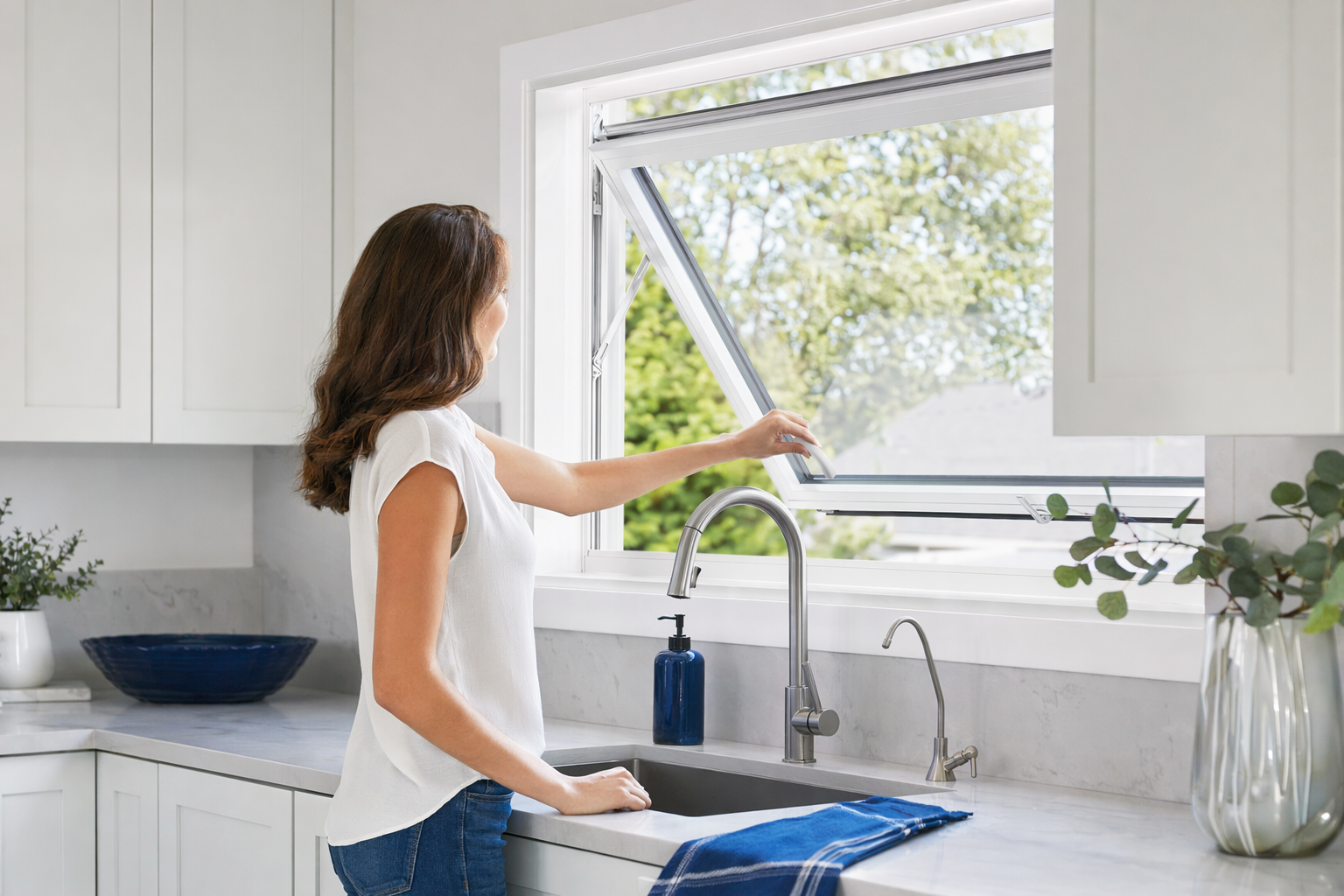
What casement and awning windows are
Both styles swing open on hinges, not by sliding up and down.
- Casement windows are usually hinged on the side and open outward like a door, often with a crank.
- Awning windows are usually hinged at the top and open outward from the bottom.
Homeowners often choose these windows for airflow and a tighter seal. When closed, the sash presses against the frame, which can help reduce drafts when the unit is made and installed well.
These styles are common in:
- kitchens over sinks
- bathrooms
- basements
- living rooms where you want a cleaner view
- combinations with fixed picture windows
Casement windows are good when you want more direct breeze. Awning windows are useful higher on a wall or in places where you may want ventilation during light rain. If you are still comparing styles, see double-hung windows for a side-by-side reality check on function and upkeep.
How replacement usually works
A replacement project is mostly about fit, condition, and scope.
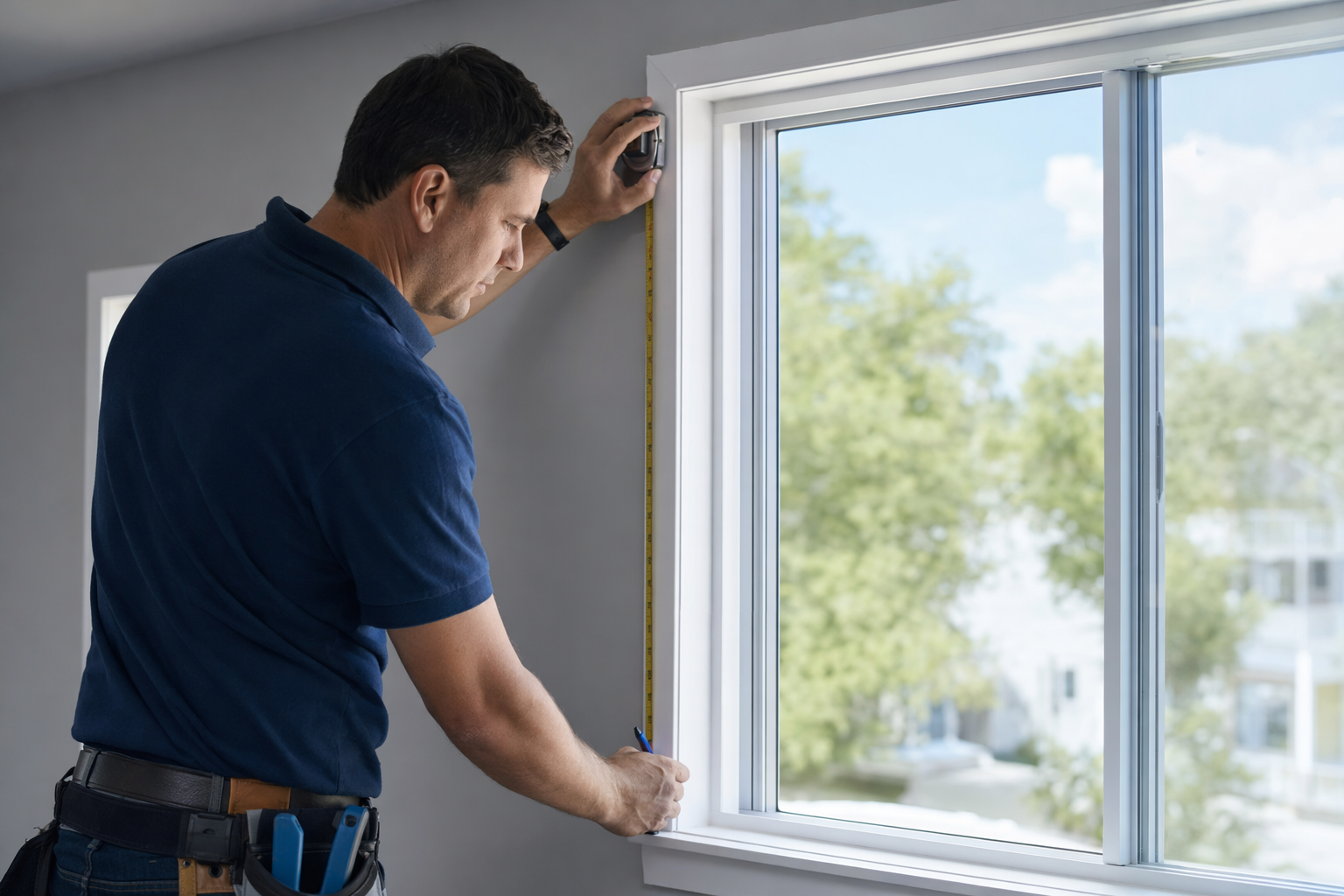
1. Measure the opening. The installer checks width, height, squareness, and wall condition.
2. Choose the replacement type. You may hear insert replacement or full-frame replacement.
- Insert keeps the existing frame if it is still sound.
- Full-frame replaces the whole unit and is often needed if there is rot, water damage, air leakage around the frame, or older problems you do not want to cover up.
3. Pick the frame and glass package. Common frame choices are vinyl, fiberglass, and wood. Glass options may include double pane, triple pane, Low-E coating, and argon gas. U-factor and SHGC matter here. You can learn the basics in window energy ratings explained.
4. Review the written scope before any deposit. Make sure the paperwork lists the frame material, glass package, hardware finish, exterior color, screens, interior trim work, and disposal.
5. Installation and finish work. Follow local permit and building code rules. Ask who is responsible for permit paperwork if one is required in your area.
SashPoint does not install windows. We help you understand the project and get matched, at no cost, with licensed and insured installers. You compare quotes, you choose who to hire, and you hold final payment until the job is done as agreed. Start here: get matched.
Typical cost per window
For most standard replacement windows in the US, installed cost is often about $400 to $1,200 per window. Casement and awning windows often land in the middle to upper part of that range because the hardware and operating parts can cost more than simple sliding designs.
Typical ranges:
- Casement window: often about $500 to $1,200 installed for a standard size
- Awning window: often about $450 to $1,100 installed for a standard size
- Large custom sizes, specialty colors, upgraded hardware, or triple-pane glass: usually cost more
- Full-frame replacement: usually costs more than insert replacement
A whole-house project often runs about $8,000 to $25,000+, depending on how many windows you replace and what kind of products you choose.
These are typical estimates, not quotes. Real price depends on:
- number of windows
- size of each opening
- window style and hardware
- frame material
- glass package and energy ratings
- full-frame vs insert work
- home age and condition
- labor rates in your area
A low price is not always a deal. If one bid is far below the others, check whether it leaves out disposal, trim repair, permit costs, upgraded glass, or exterior capping. For a broader breakdown, see window costs.
Energy, comfort, and where these windows help most
Casement and awning windows are often sold as energy-efficient windows. That can be true, but the honest answer is it depends on the whole package.
When these windows perform well, homeowners often notice:
- fewer drafts near the window
- less outside noise than old single-pane units
- more even room comfort
- easier ventilation control
But savings are usually modest and variable, not magic. New windows may lower heating and cooling waste, but real savings depend on:
- your current windows and how leaky they are
- climate and local energy rates
- how much sun the window gets
- size and number of windows
- the U-factor and SHGC you choose
- air sealing and installation quality
Good questions to ask about energy performance:
- What is the U-factor?
- What is the SHGC for my climate and window direction?
- Is the glass double pane or triple pane?
- Does it have Low-E coating and argon gas?
- Is this product ENERGY STAR certified for my region?
In many homes, double-pane Low-E glass is the practical choice. Triple pane can help in colder climates or noisy areas, but it raises cost and does not always make financial sense. The best choice depends on your home, area, and goals. Read more in energy-efficient windows and glass package guide.
Pros and cons to think about before you buy
No window style is perfect. Casement and awning windows solve some problems and create a few of their own.
Pros
- Tight closing seal can help with drafts
- Wide opening for ventilation
- Good view because there is often less middle framing
- Crank operation can be easier over sinks or counters
- Awning style works well for basements and higher wall placement
Cons
- Hardware can wear out over time and may need adjustment or replacement
- Open sash sticks outward, which can be a concern near walkways, decks, shrubs, or tight exterior spaces
- Window AC units usually do not fit these styles well
- Screens are commonly on the inside, which some homeowners do not like
- Large units can be heavier and more expensive
- In some homes, wind exposure matters; ask how the hardware and hinges hold up in your area
Frame material matters too:
- Vinyl: usually lower cost and low maintenance
- Fiberglass: stronger, stable, often costs more
- Wood: classic look, but more upkeep
If you are choosing between materials, see the frame material guide.
What to ask before you sign
This is where many homeowners get burned. Get the details in writing before any deposit.
Ask every installer the same core questions:
1. Are you licensed and insured for this work in my area?
Verify the license and insurance yourself.
2. Is this an insert replacement or full-frame replacement? Why?
Ask them to show you what they saw.
3. What exactly is included in the price?
Have them list the glass package, frame, U-factor, SHGC, screens, hardware, trim, capping, cleanup, and disposal.
4. Who handles permits if they are required?
Follow local permit and building code rules.
5. How will you address hidden rot or water damage if you find it?
Ask how change orders are approved.
6. What are the lead times and the payment schedule?
Keep final payment until the job is complete and the scope is met.
Red flags:
- pressure to sign today only
- vague paperwork
- no model details or energy ratings listed
- refusal to provide license or insurance information
- a large deposit before materials are clearly specified
SashPoint is a free matching service. Participating installers pay a flat fee to be part of the network. Homeowners pay nothing to use the matching service.
How to vet an installer and compare quotes fairly
Do not just compare the bottom-line number. Compare the same scope.
Use this simple checklist:
- Match the window count and sizes
- Match insert vs full-frame scope
- Match frame material
- Match glass package, including Low-E, panes, argon, U-factor, and SHGC
- Match exterior and interior finish work
- Match warranty terms on product and labor
- Match permit responsibility and cleanup
Then ask yourself:
- Did they explain things clearly?
- Did they inspect the openings carefully?
- Did they answer questions without pressure?
- Did they give a written scope before asking for money?
This step matters as much as the product itself. A good window installed badly can still leak air and water.
For a practical homeowner checklist, read vet a window installer. If you want to compare licensed and insured local pros, get matched and review the options yourself.
Casement and awning windows can feel tighter and more comfortable than old windows, but price and performance depend on the frame, glass package, installation method, and your home. Get written quotes from licensed and insured installers, compare the same scope, verify license and insurance yourself, and do not make final payment until the job is finished as agreed.