Window frame materials compared
The frame matters almost as much as the glass. It affects price, maintenance, comfort, and how long your replacement windows hold up in real weather.
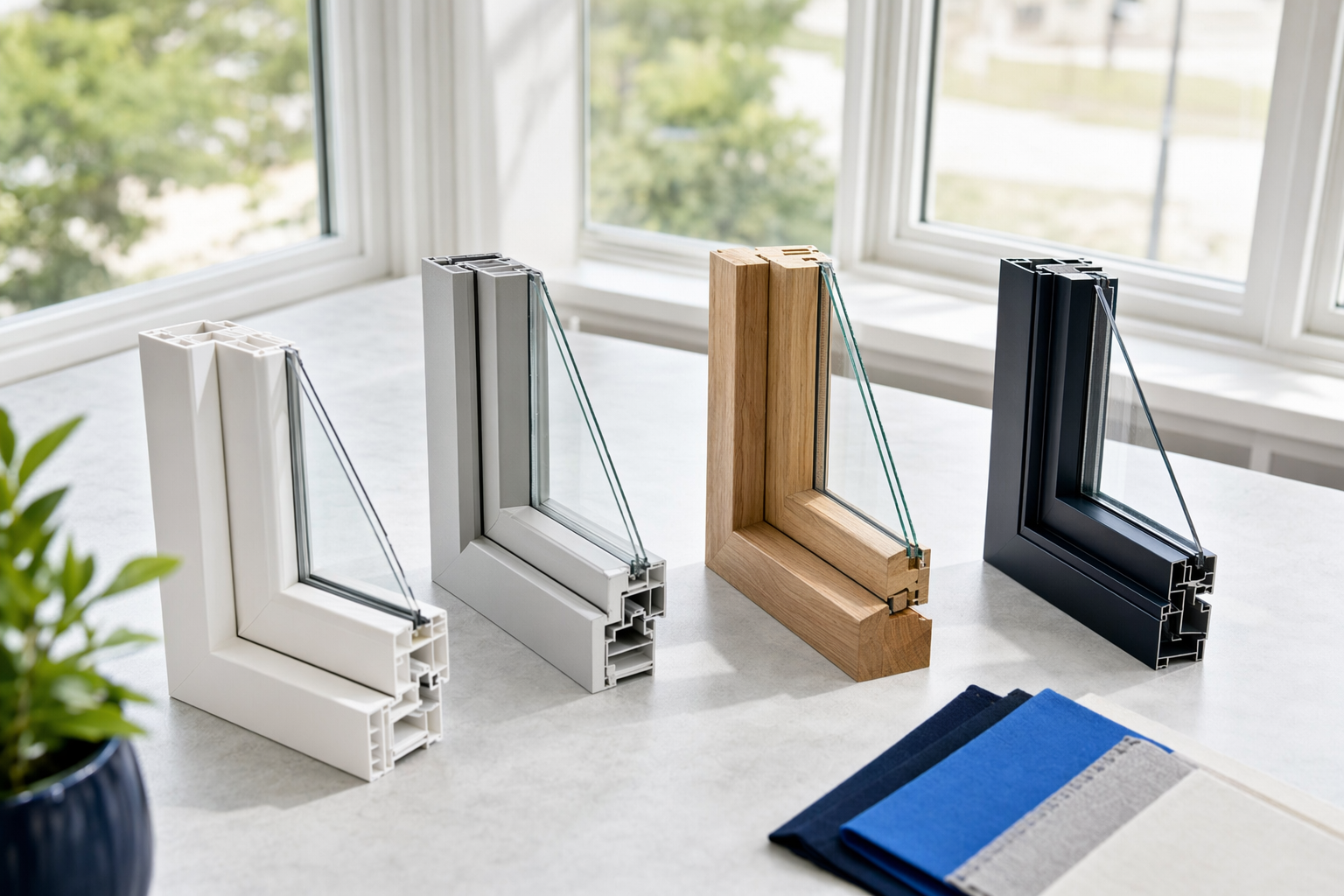
Start with the big trade-offs
Most homeowners end up comparing vinyl, fiberglass, wood, and sometimes aluminum or composite-style options. There is no single best frame for every house. The right choice depends on your climate, your budget, how much upkeep you will tolerate, and whether the installer can fit the new unit correctly.
A good frame should do four jobs well:
- Seal out air and water
- Hold the glass securely
- Handle heat, cold, and sun without warping too much
- Fit the opening properly
The last point gets missed. Even a good frame can perform badly if the opening is out of square, the flashing is wrong, or the installer cuts corners. That is why SashPoint helps you compare licensed and insured installers, not just product claims.
Typical installed cost for a standard replacement window is often about $400-$1,200 per window, but the real price depends on the number and size of windows, the window style, the glass package, the home's age and condition, the area, and local labor costs. Frame material is only one piece of that total. You can see broader price ranges on our window cost guide.
If you are also deciding between styles, the frame material may affect which styles make sense. For example, double-hung windows are common in many homes, while other openings may work better with a different operation type.
How the main frame materials compare
Here is the honest version.
Vinyl
Vinyl is popular because it is usually the most budget-friendly option and needs little maintenance. It does not need painting, and it generally insulates better than bare metal frames.
- Usually one of the lowest-cost choices
- Low maintenance
- Good all-around energy performance when paired with a solid glass package
- Many color options, but fewer premium finish choices than wood
- Quality varies a lot by manufacturer and product line
- In strong sun or large sizes, cheaper vinyl can flex more than better-built frames
Fiberglass
Fiberglass often costs more than vinyl, but many homeowners like it because it is stable, durable, and can handle temperature swings well.
- Often stronger and more dimensionally stable than vinyl
- Good for hot/cold climates with big seasonal changes
- Lower expansion and contraction than vinyl in many conditions
- Can cost more upfront
- Fewer bargain options, which can be good or bad depending on budget
Wood
Wood looks great in the right house. It can be a strong choice for older homes or where interior appearance matters a lot. But it needs upkeep.
- Warm, classic look inside the home
- Often fits historic or traditional homes well
- Can be painted or stained
- Usually more maintenance
- Vulnerable to rot, swelling, or paint failure if water is not managed well
- Often costs more than vinyl and sometimes more than fiberglass
Aluminum
Aluminum is less common for standard residential replacement in many parts of the US, but you still see it. It is strong and slim, but it is not usually the top choice for thermal performance in typical homes unless the product is designed well.
- Strong, narrow sightlines
- Can work in certain modern designs
- Often not as insulating as other common residential frame materials
- Can feel colder or hotter depending on climate and product design
If you want a deeper breakdown of trade-offs, see our frame material guide.

Energy performance: frame matters, but glass matters too
Homeowners sometimes focus too much on the frame and ignore the glass package. In real life, the glass package often drives a big part of comfort and efficiency.
Look at the whole window, not just the frame. Ask for these details in writing:
- U-factor: Lower usually means less heat loss.
- SHGC: This tells you how much solar heat the window lets in.
- Low-E coating: Helps control heat transfer.
- Double vs triple pane: Triple can help in some climates, but it costs more and is not always necessary.
- Gas fill: Argon is common. It can improve performance, but it should not be the only reason you choose a window.
A well-chosen vinyl frame with a smart glass package can beat a more expensive frame paired with weak glass. Climate matters too. In a cold climate, you may care more about heat loss. In a hot, sunny climate, SHGC may matter more.
Be careful with sales language around "energy savings." New windows can reduce drafts and make rooms more comfortable, but typical savings are modest and vary widely. Real savings depend on the number and size of windows, the old windows being replaced, the glass package, the home's age and condition, air sealing, climate, local energy rates, and how you heat and cool the home. No one should promise a certain dollar amount or payback period.
If you want help reading labels and ratings, use window energy ratings explained. For more on the full package, including Low-E and pane options, see our glass package guide.
What to do before you choose a frame
Do this in order. It helps you avoid the most common expensive mistakes.
1. Look at your existing openings
Are the current frames rotted? Is there water damage? Does the trim look square? If the opening has damage, a simple insert replacement may not be enough.
2. Decide how much maintenance you will really do
If you know you will not repaint or watch for water damage, wood may not be your best fit.
3. Match the frame to the house and climate
A budget vinyl option may be fine in many homes. A stronger frame may make more sense for large units, harsh sun, or major temperature swings.
4. Ask whether the project is insert or full-frame
This matters a lot. Full-frame replacement usually costs more, but it may be the better fix if the old frame is damaged or the opening needs correction.
5. Get at least 2-3 written quotes
Compare the frame material, glass package, style, U-factor, SHGC, warranty terms, and installation scope. Make sure those details are written down before any deposit.
6. Hire licensed and insured installers, and verify it yourself
Do not just take a business card at face value. Ask for license and insurance information and verify them directly. Follow local permits and building code.
If you want a simple way to start, you can get matched with licensed and insured installers in your area at no cost to you. You compare quotes. You choose who to hire. You hold the final payment until the job is done to your satisfaction.
Common mistakes homeowners make
These mistakes cause a lot of regret:
- Buying on frame material alone
The frame matters, but so do the glass package, spacer system, weatherstripping, and the quality of installation.
- Choosing the cheapest vinyl without checking build quality
Not all vinyl windows are equal. Thin frames and weak hardware can create problems later.
- Ignoring full-frame vs insert replacement
If the old opening has rot or water issues, an insert may hide the problem instead of fixing it.
- Not asking for ratings and scope in writing
Get the exact glass package, frame material, U-factor, SHGC, and installation scope before you sign.
- Trusting big energy-saving promises
New windows can help comfort and reduce drafts, but the savings are usually not dramatic enough to justify sloppy math.
- Skipping license and insurance checks
Always verify both yourself. Also ask who handles permits when permits are required, and make sure the work follows local code.
- Paying too much upfront
Keep control of the project. Read the payment schedule carefully, and do not release final payment until the work is completed as agreed.
For a practical checklist on hiring, read how to vet a window installer.
A smart next step for most homeowners
If you are stuck between two frame materials, do not try to solve it from brochures alone. Ask each installer the same short set of questions:
- Which frame material do you recommend for my climate and this opening, and why?
- Is this quote for insert or full-frame replacement?
- What are the U-factor and SHGC for this exact window?
- What maintenance should I expect in 5-10 years?
- What parts of the opening, trim, or flashing are included in the scope?
Then compare the answers side by side.
For many homeowners, the best value is not the cheapest frame and not the most expensive one. It is the option with the best fit for the house, a sensible glass package, and a careful licensed and insured installer.
SashPoint is a free matching service. Participating installers pay a flat fee to be included. Homeowners do not pay to use the service. You compare options, ask questions in your preferred language when available, and decide what makes sense for your home.
Pick a frame material based on your climate, budget, and how much upkeep you will do. Then compare written quotes from licensed and insured installers that show the frame, glass package, U-factor, SHGC, and whether the job is insert or full-frame.