Replacing Windows as a New Immigrant in the US
If window replacement in the US feels confusing, you are not alone. The words, prices, and sales tactics can be hard to follow, especially if English is not your first language.

Start with the basics so you do not get pushed around
In the US, replacement windows are usually sold and installed by local contractors, not by one national system. Prices, products, and work quality can vary a lot from one company to another.
SashPoint is a free matching service. We help you understand the project and connect with licensed, insured window installers in your area. You compare quotes, you choose who to hire, and you hold the final payment. If you want to start, use get matched.
A few honest facts help right away:
- A typical installed price for a standard replacement window is often about $400-$1,200 per window.
- Impact windows are often around $700-$1,600 each.
- Bay or bow windows can run about $1,500-$4,500 each.
- A whole-house project often lands around $8,000-$25,000+.
These are typical ranges, not quotes or guarantees. Your real price depends on the number and size of windows, the style, the frame material, the glass package, whether the job is insert or full-frame replacement, the age and condition of the home, your area, and local labor costs.
Good windows can reduce drafts and heat loss. But be careful with big promises. Energy savings are usually modest and vary widely based on climate, local energy rates, the old windows you have now, and the glass package you choose.
The window words you need to know
You do not need to become an expert. But learning a few common terms makes it much easier to compare offers.
1. Insert replacement vs full-frame replacement
- Insert replacement keeps the existing frame if it is still in good shape.
- Full-frame replacement removes the old frame too. It usually costs more, but may be the better choice if there is rot, water damage, or poor insulation around the opening.
2. Double-pane vs triple-pane
- Double-pane is common and works well for many homes.
- Triple-pane can improve comfort in some climates, but costs more and is not always worth the extra price.
3. Low-E coating and argon gas
- Low-E is a coating that helps control heat transfer.
- Argon gas is often placed between panes to improve performance.
- These features are common in better glass packages, but they still need to make sense for your climate and budget.
4. U-factor and SHGC
- U-factor measures how much heat the window lets escape. Lower is generally better.
- SHGC means Solar Heat Gain Coefficient. It measures how much solar heat comes through the glass.
- The best numbers depend on where you live and how much sun your home gets. Read window energy ratings explained if you want a simple breakdown.
5. Frame materials
- Vinyl is common, lower-maintenance, and often budget-friendly.
- Fiberglass is strong and stable, usually at a higher cost.
- Wood can look great, but often needs more maintenance.
If you want help comparing materials, see the frame material guide.
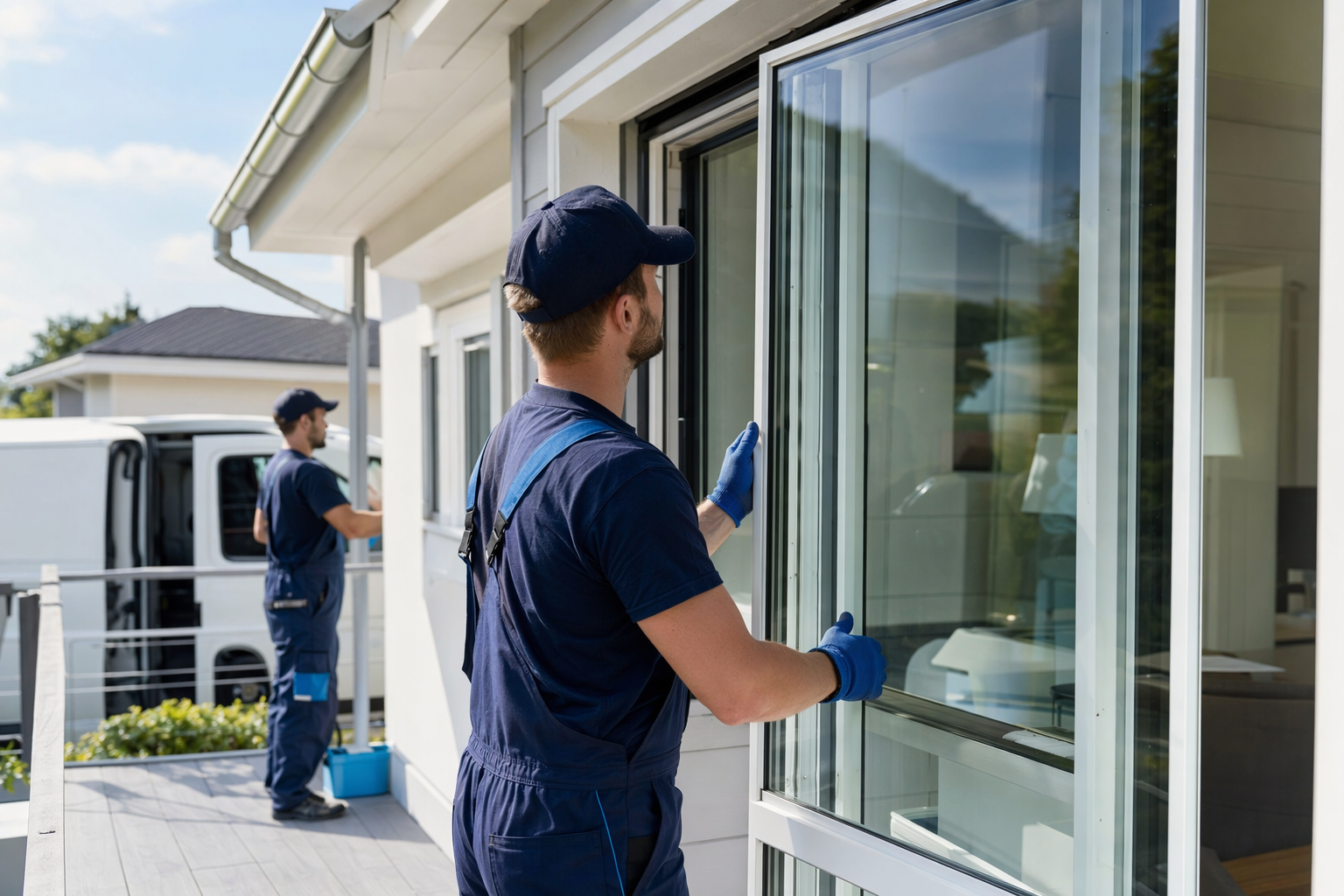
Your options depend on your home, climate, and budget
Not every house needs the same window. A good installer should ask about your goals before talking price.
Common homeowner goals include:
- Stop drafts and outside noise
- Replace windows that are hard to open or lock
- Fix rot, leaks, or old damaged frames
- Improve comfort in very hot or very cold rooms
- Match the look of the home
Some practical choices:
- Double-hung windows are popular because both sashes can move. They are common in many US homes and are easier to clean from inside. Learn more about double-hung windows.
- Casement windows open outward with a crank and can seal tightly when closed. They are often chosen for airflow and a cleaner seal. See casement windows.
- Energy-efficient windows often include Low-E glass, double or triple pane glass, and a climate-appropriate glass package. They can improve comfort, but savings vary. Read more about energy-efficient windows.
A fair conversation should include the glass package, frame type, and energy ratings in writing. If one quote only says "premium glass" or "upgraded window," that is not enough. Ask for the exact scope.
Also remember: the cheapest quote is not always the lowest total cost. A low price can mean weak installation details, poor cleanup, or a vague warranty. On the other hand, the highest quote is not automatically the best either.
How to compare installers without getting trapped
If you are new to the US, the hardest part is often not the window. It is the sales process.
Use this checklist before you sign anything:
1. Hire licensed and insured installers. Verify the license and insurance yourself.
2. Get at least 2-3 written quotes so you can compare price and scope side by side.
3. Make sure each quote lists:
- window style
- frame material
- glass package
- U-factor and SHGC when relevant
- insert or full-frame replacement
- exterior/interior finish details
- cleanup and disposal
4. Follow local permits and building code. Requirements can differ by city and state.
5. Do not pay the full amount up front. Keep final payment until the job is finished and you have checked the work.
Watch for red flags:
- Pressure to "sign today only"
- A salesperson who will not leave a written scope
- Very large deposits before materials are ordered
- Claims of guaranteed energy savings or guaranteed payback
- Refusal to answer basic questions about licensing, insurance, permits, or installation method
If you want a deeper checklist, read how to vet a window installer.
How SashPoint helps if English is not your first language
Many homeowners understand the house problem, but not the industry language. That is where a matching service can help.
SashPoint is free for homeowners. Participating installers pay a flat fee to be included. Our job is to help you move from confusion to a clear next step.
What that can look like:
- You share basic project and contact details
- We help narrow the type of project you may need
- We connect you with licensed, insured installers in your area
- You compare the written quotes yourself
- You decide who to hire, if anyone
That matters when you are dealing with unfamiliar terms like Low-E, argon, SHGC, insert replacement, and full-frame replacement. It also helps when you want a calmer process without hard selling.
A simple example: one family needed to replace 11 old drafty windows in a 1970s home. One quote was lower, but it did not clearly say whether trim repair, disposal, and permit handling were included. Another quote cost more, but spelled out the frame type, glass package, installation method, and cleanup. The better value was easier to see once the scope was written clearly.
If you are ready, start here: get matched. You can also review broader window costs before you talk to anyone.
Learn the basic window terms, get 2-3 written quotes, verify license and insurance yourself, and do not sign until the scope, glass package, and price are clear. If you want help finding licensed, insured installers, SashPoint can match you for free.